
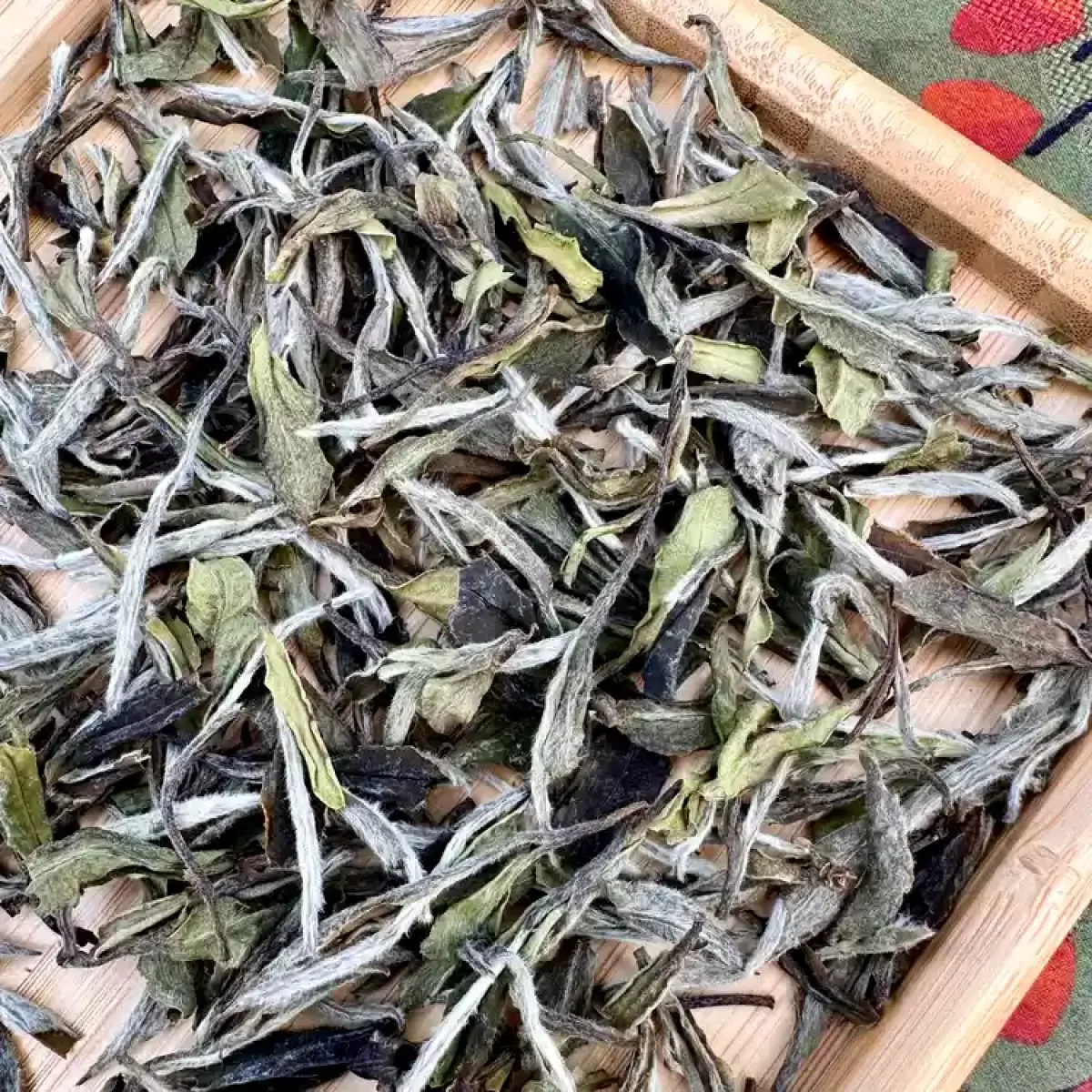

2020 Golden Peak Mountain White Peony Supreme White Tea
- OriginFuding, Fujian · Golden Peak Mountain, Guanyang
- Vintage2020
- GradeSupreme
- Add to wishlist
- Add to compare
Product Description
2020 Golden Peak Mountain White Peony Supreme from Guanyang
This White Peony Supreme was harvested in 2020 from tea gardens on Golden Peak Mountain, part of the Guanyang area of Fuding. Guanyang is best known as home to the largest high-altitude ecological tea garden base in the region, a designated water-source protection zone where the forest stays thick and the gardens are kept free of heavy inputs. Tea grown here starts with an advantage that no amount of processing can fake: altitude, clean air and mineral-rich soil.
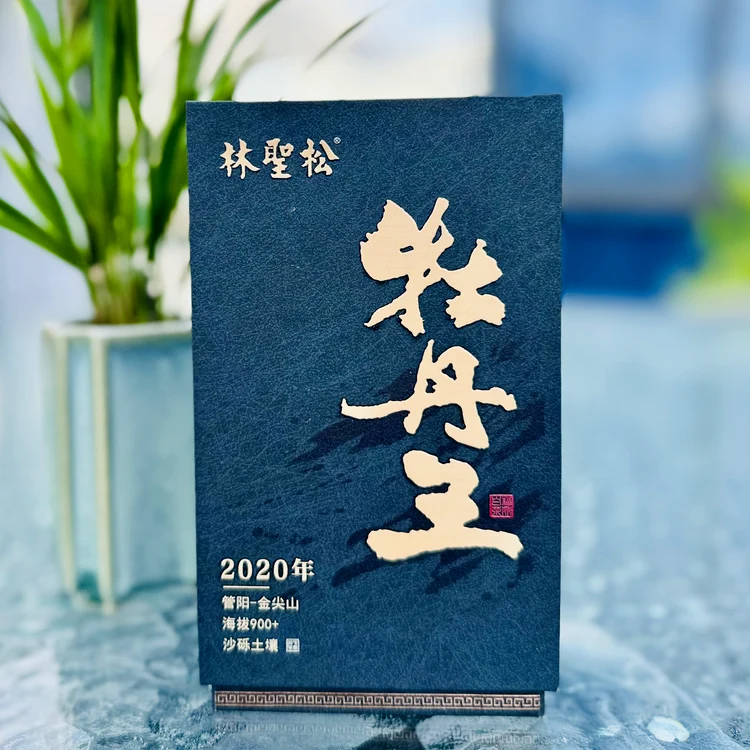
Why Golden Peak Mountain matters
The gardens sit at over 900 metres, high enough that cloud and mist roll through for a good part of the day. That does two things. The cloud cover softens the sunlight, so the buds and leaves grow more slowly and pack in more of the compounds that later read as aroma and sweetness. And the constant humidity keeps the leaf supple, so it withers evenly instead of drying out on the surface while staying damp inside.
The ground here is gravelly and mineral-rich, and the high forest coverage means the tea bushes share the hillside with native trees rather than standing in a bare monoculture. Drinkers notice the result as a clean, mineral-edged character that sits underneath the flower and freshness, a kind of cool stone undertone that you rarely find in lowland peony. It is the signature of the mountain, not a flavour we add.
What "White Peony Supreme" means
Inside the White Peony category, this lot is graded as Supreme, a selection above standard White Peony. The raw material is made up of one bud with one or two young leaves, chosen for well-formed shape and even size. More of the harvest goes into each kilogram than it would for an ordinary peony, and the picking is done with more care about which leaves make the cut. In the cup that shows up as a denser, more fragrant tea that holds its character through many steeps instead of fading after the first few rounds.
The 2020 vintage, now settled
Drinking a White Peony from 2020 means drinking it after several years of careful storage, and that changes the tea in a good way. The raw, grassy edge of a young peony has softened, and the fresh florals have started to give way to a rounder, deeper sweetness. You still get the bright mountain character and the mineral finish, but underneath there is now a gentle aged note, the beginning of the dried-fruit sweetness that old white tea is known for. It sits in a useful middle ground: fresh enough to enjoy today, young enough to keep for a few more years if you want to watch it age.
Tasting notes
The dry leaf smells clean and sweet, with a faint hay-and-flower aroma. Once brewed, the liquor turns bright golden and carries a high, clear mountain scent, part floral, part fresh vegetal, with that mineral undertone running through it. On the palate it is smooth and fairly light-bodied, opening with floral and fresh notes and finishing clean and cool, with a lingering sweetness at the back of the throat. There is no astringency to fight; this is a tea that rewards attention but forgives a wandering mind.
The tea keeps its character across multiple infusions. Early steeps show the florals; later ones bring out the mineral sweetness and the gentle aged note. It is the kind of peony that makes you want to keep brewing until the leaf finally gives out, which takes a good while.
How to brew it
Use 5 g per 150 ml of water at 90–95°C. Give it a quick rinse, then brew in 20–30 second infusions, adding a little time each round so you can follow how the aroma develops and shifts. A glass gaiwan or a small porcelain pot works best, since neither adds its own flavour. With cooler water it turns softer and sweeter; with hotter water the mineral and aged notes come forward. Both are worth trying.
Storage and serving
Keep the tea sealed, dry and away from direct light and strong odours. Stored properly, this 2020 peony will continue to age well for years, slowly gaining the honeyed depth of older white tea. It is available as 250 g packs, and with each 250 g pack we include a complimentary 50 g tin of the same tea, so you can open the small tin for everyday drinking and keep the larger pack for aging.